

Are Floss and Interdental Brushes Necessary? Why Brushing Alone Is Not Enough
Hello!
This is Nagoya Yagoto Dental & Orthodontics, AEON Yagoto, located in Showa-ku, Nagoya.
Have you ever been told at a dental checkup, 'There is still plaque left,' even though you brush your teeth thoroughly every day? In fact, there is plaque that cannot be removed by brushing alone. That plaque can cause cavities and periodontal disease. This is where auxiliary cleaning tools such as 'dental floss' and 'interdental brushes' come into focus. By incorporating these, a higher level of oral care is possible. In this article, we explain in detail why brushing alone is not enough, the necessity of floss and interdental brushes, and their correct usage.
1. What Plaque Cannot Be Removed by Brushing Alone?
Brushing is an important habit for removing dirt and plaque attached to the surface of the teeth. However, no matter how carefully you brush, there are areas where the bristles of the toothbrush cannot reach. In particular, plaque tends to remain between the teeth and on the sides of the back teeth, where it can easily accumulate. Over time, plaque hardens and turns into tartar. Once it becomes tartar, it cannot be removed by regular brushing and requires cleaning at a dental clinic. Also, if plaque remains for a long time, it can cause inflammation of the gums and lead to periodontal disease. For these reasons, brushing alone cannot provide complete care, so it is recommended to use auxiliary cleaning tools as well.
2. Features and Usage of Dental Floss
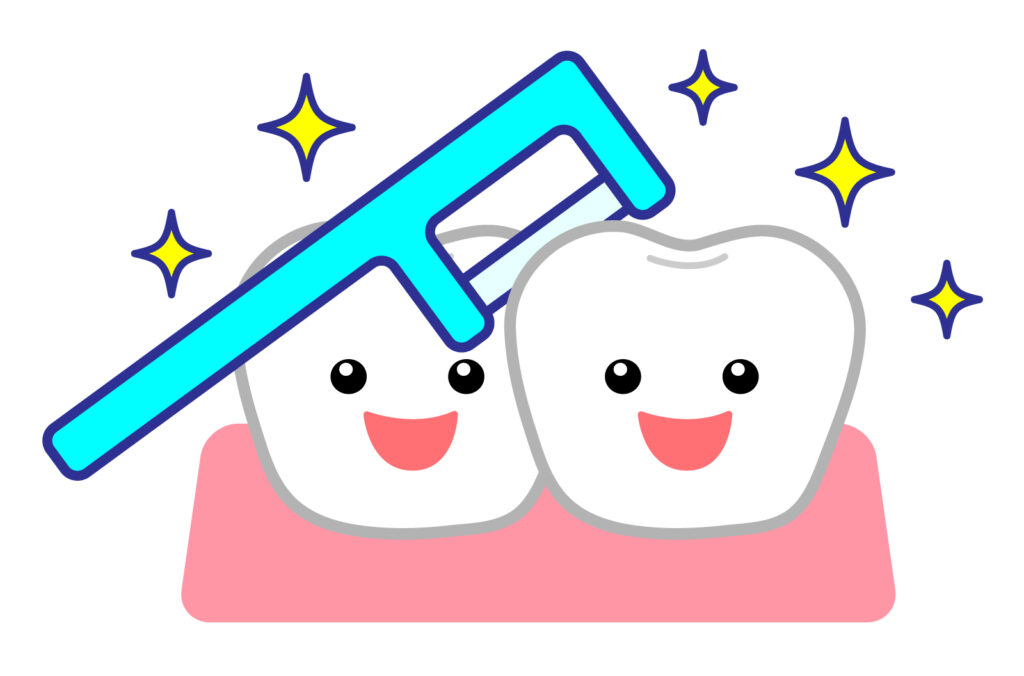
Dental floss is a tool used to clean between the teeth by threading a string through the gaps. It can effectively remove food debris and plaque stuck in areas that a toothbrush cannot reach. It is especially suitable for caring for the front teeth and areas where teeth are tightly packed together.
To use, take a length of floss about the length of your arm, wrap it around your fingers to stabilize it, and gently insert it between your teeth. While being careful not to injure your gums, move the floss up and down along the sides of the teeth to clean. There are types of floss that are just string and types with holders. For beginners or those who find it difficult to use on back teeth, holder-type floss may be easier to use.
At Nagoya Yagoto Dental & Orthodontics, AEON Yagoto, we can also provide instruction on correct brushing methods and how to use floss, so please feel free to visit us.
3. Features and Usage of Interdental Brushes
An interdental brush is a stick-shaped tool with a small brush attached, mainly suitable for cleaning slightly wider gaps between teeth. Like floss, it can remove plaque and food debris from places that are hard to reach with a toothbrush.
Interdental brushes come in various sizes, so it is important to choose a size that fits the gaps between your teeth. If the size does not fit, it may not remove dirt effectively or may injure your gums.
To use, select a brush size that fits easily into the gap without force, and while looking in the mirror, slowly insert it straight. Move it back and forth a few times to remove debris, then move to the next gap. Be careful not to let the metal part touch your teeth. Interdental brushes are especially suitable for cleaning between back teeth and areas where the gums have receded and gaps have widened due to periodontal disease.

4. How to Use Dental Floss and Interdental Brushes Appropriately?
Dental floss and interdental brushes may seem similar in function, but they are different. Many people may wonder which to use, but it is important to use them appropriately depending on the condition of your teeth and the size of the gaps. If your teeth are tightly packed together, floss is more suitable. The thin thread can easily enter the gap and clean effectively. On the other hand, if there are gaps or if the gums have receded due to periodontal disease, interdental brushes are more effective. Also, by using both floss and interdental brushes, you can clean a wider area. For example, use floss for the front teeth and interdental brushes for the back teeth to increase overall cleaning effectiveness. Incorporating these into your daily care can help prevent cavities and periodontal disease, and protect your oral health in the long term.
5. Summary
Plaque that cannot be removed by daily brushing alone can cause cavities and periodontal disease. Dental floss and interdental brushes are important items that supplement cleaning in areas a toothbrush cannot reach. Floss is suitable for areas where teeth are tightly packed, while interdental brushes are suitable for areas with gaps and for back teeth.
By choosing tools that suit you and using them correctly, you can achieve more effective oral care. Consult with your dental clinic to find the best care method for you. Careful daily care is the first step to protecting your healthy teeth in the future. For residents of Mizuho-ku and Showa-ku, Nagoya Yagoto Dental & Orthodontics, AEON Yagoto is conveniently located, so please feel free to visit us!
Information about Nagoya Yagoto Dental & Orthodontics, AEON Yagoto, your dentist in Yagoto
Located on the 4th floor of AEON Yagoto, directly connected to Yagoto Station on the subway, and open on weekends and holidays.Hours & Access/About the Clinic