

Why Do My Gums Bleed? Possible Causes and Proper Ways to Deal With It
Hello!
This is Nagoya Yagoto Dental & Orthodontics, AEON Yagoto, located in Showa-ku, Nagoya.
Have you ever noticed your gums bleeding while brushing your teeth or eating? Since it often does not cause pain, some people may overlook it, thinking "it's probably fine." However, bleeding from the gums may be a sign that something is wrong in your mouth. In this article, we will clearly explain the causes of bleeding gums and how to deal with it. Please use this as an opportunity to review your daily oral care.
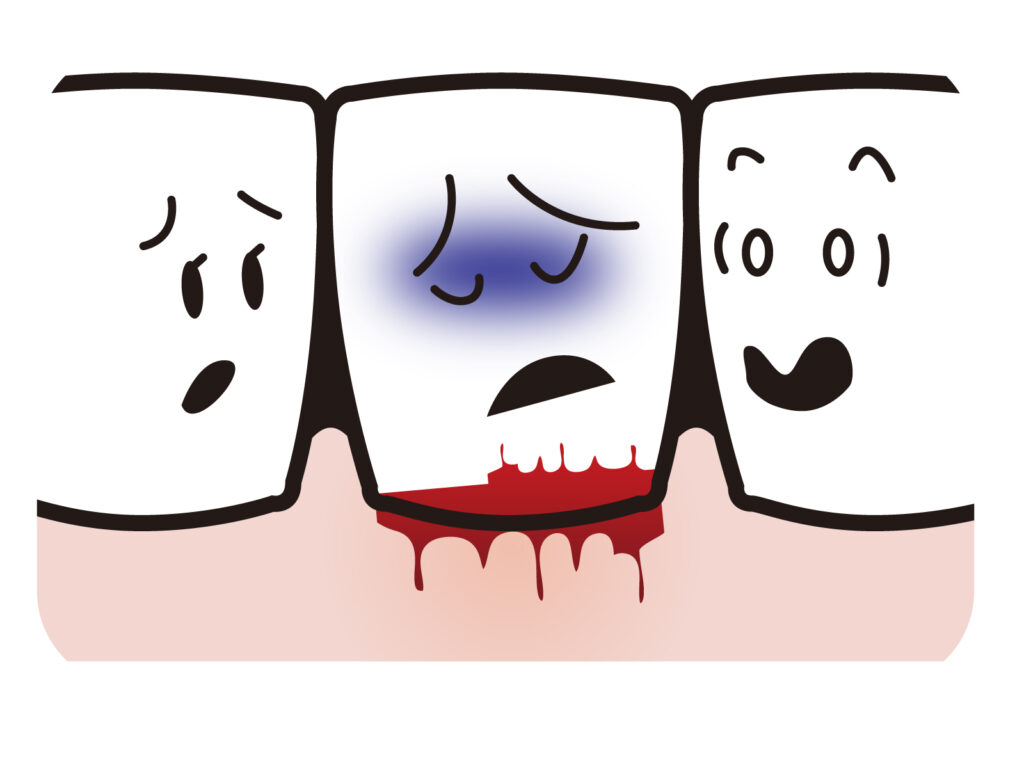
1. Why Do Gums Bleed?
Bleeding from the gums is often a sign of inflammation. The most common cause is a disease called "periodontal disease," where plaque and tartar accumulate between the teeth and gums, allowing bacteria to multiply, which causes the gums to become red, swollen, and prone to bleeding. Since it often progresses with few symptoms, bleeding can be considered an important early sign.
Other causes include brushing too hard or using a toothbrush with bristles that are too hard. The gums are soft and delicate tissue, so excessive stimulation can injure them and cause bleeding. It is necessary to review your daily care methods. In addition, stress, hormonal changes, and overall health can also have an effect. For example, during pregnancy or when illness lowers immunity, the gums may become more sensitive and bleed more easily.
2. What Are the Main Possible Causes?
There are several possible reasons for bleeding gums, but the most common is periodontal disease. In its early stage, periodontal disease is called "gingivitis," where the gums become red, swollen, and bleed. If care is taken at this stage, it is possible to return to a healthy state. However, if left untreated, the inflammation can progress to "periodontitis," where the bone supporting the teeth may dissolve.
How you use your toothbrush is also important. Using a hard-bristled brush or brushing too hard can injure the gums and cause bleeding. It is important to brush gently and carefully.
In addition, dry mouth and decreased saliva production can have an effect. Saliva helps wash away bacteria and keep the mouth clean, but when saliva production decreases, bacteria can multiply more easily, making the gums more prone to inflammation.
3. Home Remedies and Preventive Measures
First, it is important to develop correct tooth brushing habits. The key is to gently brush along the border between the teeth and gums, being careful not to injure the gums. Choose a toothbrush with "medium" or "soft" bristles, and replace your toothbrush regularly.
Dental floss and interdental brushes are also effective. Food debris and plaque left between teeth cannot be completely removed with a regular toothbrush. Adding these to your daily brushing routine helps keep your mouth cleaner.
Diet also affects gum health. If you lack nutrients such as vitamin C, your gums can weaken and bleed more easily, so aim for a well-balanced diet. Drinking enough water also promotes saliva production, which helps keep your mouth clean.

4. Examinations and Treatments to Receive at the Dental Clinic
If bleeding does not improve even after continuing home care, you should see a dentist. If periodontal disease has progressed or tartar has accumulated, professional cleaning or treatment may be necessary.
At the dental clinic, the condition of your gums and the cause of bleeding will be carefully checked, and appropriate treatment will be proposed. Procedures such as scaling to remove tartar and polishing the tooth surface to make it harder for dirt to stick may be performed. This can be expected to improve gum inflammation.
Depending on the progression of periodontal disease, regular maintenance may also be necessary. To maintain healthy gums, both daily self-care and professional care at the dental clinic are essential.
5. Summary
Bleeding from the gums is often overlooked, but it is an important sign of your oral health. Causes include inflammation such as periodontal disease, incorrect brushing methods, dry mouth, and nutritional deficiencies.
It is important to continue preventive measures at home, such as correct brushing, reviewing your diet, and using dental floss. If bleeding does not improve, see a dentist early for professional advice and treatment. Noticing the condition of your own mouth is the first step to protecting your future dental health. If you have any concerning symptoms, do not ignore them and take early action.
For those living in Mizuho-ku or Showa-ku, Nagoya Yagoto Dental & Orthodontics, AEON Yagoto is conveniently located, so please feel free to visit us.
Information about Nagoya Yagoto Dental & Orthodontics, AEON Yagoto, your dentist in Yagoto
Located on the 4th floor of AEON Yagoto, directly connected to Yagoto Station on the subway, and open on weekends and holidays.Hours & Access/About the Clinic